Visualizzazione post con etichetta tuscan recipes. Mostra tutti i post

mercoledì 17 giugno 2009

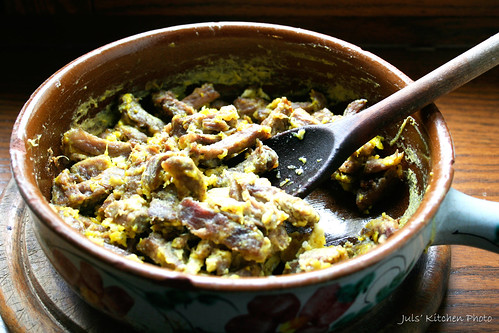
La Cucina di Nonna Menna: i crostini di milza


Lo so, siete abituati ormai ai miei racconti bucolici del mercoledì, l’infanzia di nonna, i parenti e gli avi, i modi di dire e la campagna toscana… ma questa volta se dovessi descrivervi questa ricetta attraverso alcune immagini rischierei di ripetere Kill Bill di Tarantino per quello che riguarda i colori e lo stile!
Pulire la milza è quanto di più vicino ci sia nella mia cucina alla carneficina della banda di O-ren Ishii da parte de La Sposa, davvero!

Per leggere oltre... vai su Made in Kitchen!

::::: SPLEEN CROSTINI :::::


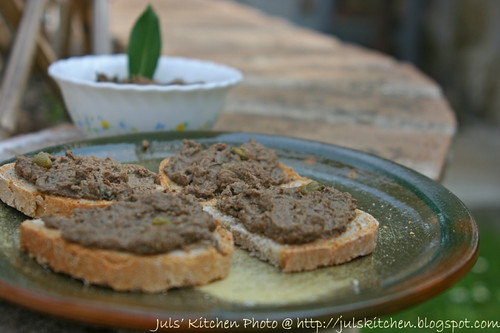
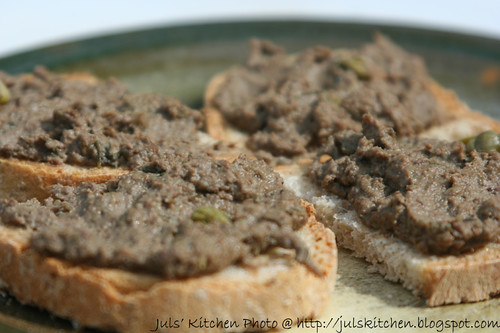
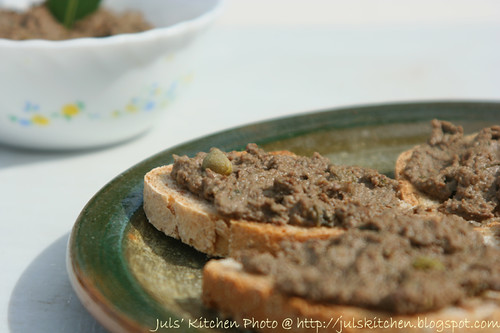
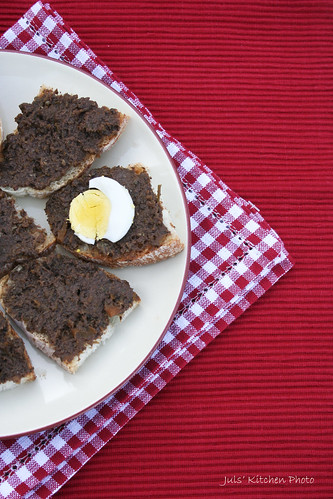
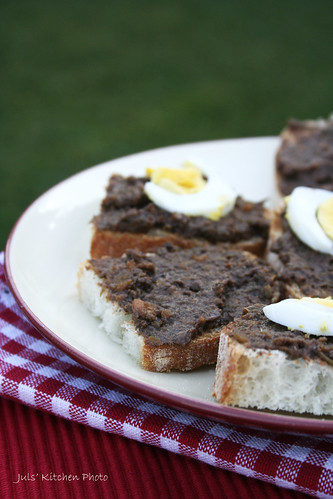
Do you remember the crostini neri? The ones made with chicken liver? Well, today I’ll show you another version: these are made only with spleen. Obviously you can make Tuscan crostini with chicken livers and spleen together, to soften the strong and intense taste of spleen. These crostini are typical of my area, we made often them , especially since my aunt Teresa gave us an infallible and reviewed recipe. It is today’s recipe! I know, I know you’re used to my Wednesday’s pastoral stories, grandma’s childhood, relatives and ancestors, traditional sayings and Tuscan countryside… but if I had to describe this recipe through some shots, I would run the risk to repeat Tarantino’s Kill Bill as regards colours and style! Clean the spleen in my kitchen is the most similar thing to O-ren Ishii’s band bloodbath committed by the Bride, really! Mum with a spoon in her hands, a huge white apron and latex gloves is Dario Argento’s worth! But let’s hit the recipe.
Ingredients:
  • beef spleen, 300 gr
  • medium onion, 1
  • carrot, 1
  • celery, 1 stalk
  • parsley, 1 tuft
  • garlic, 1 clove
  • vinegard capers, 1 large tablespoon
  • red wine, 1 glass
  • tomato sauce, qb
  • anchovy paste, qb
  • (salt)
  • extra virgin olive oil
First and foremost, the spleen.
Wear latex gloves if you don’t want to resemble a country vet up to a calf birth. Extract the pulp from the spleen by scraping it with a largo tablespoon so that the pulp meat comes out.

Mince carrot, celery, parsley, garlic and onion.
Warm a large tablespoon of olive oil in a non stick pan and sauté all the minced vegetables.
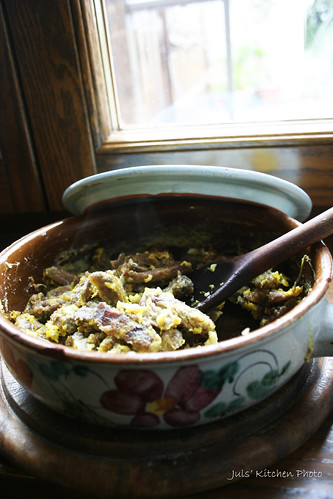
When they are soft and well sauté, add spleen pulp and stir until it gets brown and it’s cooked through.
This is the moment to add a glass of red wine: let it reduce and add a bit of tomato sauce to redden the sauce. Now, remove from the heat and add the minced capers.
What about tastiness? Don’t dare adding salt! As for the other Tuscan crostini, we’ll reach the right tastiness adding anchovy paste.
So, add little by little some anchovy paste and whip the sauce, tasting each time to find the right tastiness. It is delicious spread on a slice of Tuscan bread: add some boiled egg slice, to give a cool color contrast and soften the strong flavour of beef spleen.

mercoledì 10 giugno 2009

La cucina di nonna Menna: lesso in fricassea

Nonna è nata e cresciuta in campagna, nello stesso paesino in cui è nato e cresciuto babbo e dove tutt’ora abito io, nella casa che prima era una stalla.
Nella casa di nonna abitavano tre generazioni: c’era suo nonno Tommaso – molto moderno per i tempi: è stato lui il primo di tutto il borgo a mettere il bagno in casa – poi Piero, il figlio di Tommaso e babbo di nonna, e alla fine nonna Marcella, unica figlia, e pure femmina...
(per il resto della storia e la ricetta, vai su Made in Kitchen, come ogni mercoledì!)

::::: FRICASSEE BOILED BEEF :::::


Granny was born and grown up in the countryside, in the same hamlet where my father was born and grown up and where I still live now, in the house that used to be a stable many years ago.

In my grandmother’s house used to live three generations together: there was her grandfather Tommaso – such a modern and up-to-date man, the first one to built an inner bathroom in the house in the whole hamlet -, then Pietro, Tommaso’s son and granny’s father, then granny Marcella, the only child, and a girl, indeed!
My great-grandfather Piero had two brothers, Dante and Giuseppe, known as Bebbe.
I’ve met Uncle Beppe when I was a child: he lived more than 90 years with perfect health and clearness of mind, he drove his own car and lived alone in Colle Val d’Elsa. The secret oh his long and great life? A teaspoon of mashed garlic poured into his coffee and milk each and every morning!
Uncel Beppe was married with Aunt Casilde. They dind’t have children, so they adopted granny as favourite niece. They used to go to grandma's house in the countryside and take her to their home in town for a while. Then, my great-grandfather Piero used to go to town and take granny back to the countryside… they keep on moving forth and back until grandma Marcella married grandpa Biagio.
Grandma has always loved living in Colle: lots of people to talk with, strolls along the main road, friends, the oratory.. and, most of all, the cinema!
Uncle Beppe was the cinema keeper of the “Dei Varii Theatre”, and he used to make tickets at the entrance with his little dog, combed and perfumed, sit next to the counter!
The main course of Aunt Casilde was lesso in fricassea, fricassee boiled beef.
It’s a Sunday dish, not an everyday recipe! The boiled beef was the result of the clear soup they used to eat at lunch. If you had leftover, you could cook the meat with tomato and potato or make a fricassee with eggs. Grandma used to love this one.


Ingredients (serve 4):
  • Boiled beef, 300 gr
  • Eggs, 2
  • Flour
  • Garlic, 1 clove
  • Extra virgin olive oil
  • Salt & pepper
Heat a tablespoon of olive oil in a large pan with a garlic clove. In the meantime, slice the meat into 1- inch strips and flour plentifully.
When the olive oil is hot and the garlic has spread its flavour, saute the meat until it is golden.
Whisk two eggs with a pinch of salt and pepper and pour them into the meat, stir the eggs as making scrambled eggs.
Serve warm, with a slice of fresh tuscan bread.
Granny has told me that she used to love this dish because it soft and delicious, perfect to eat with a green salad.

mercoledì 3 giugno 2009

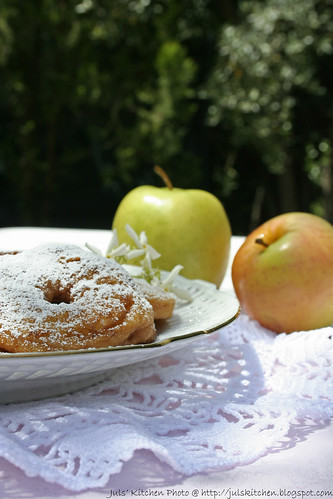
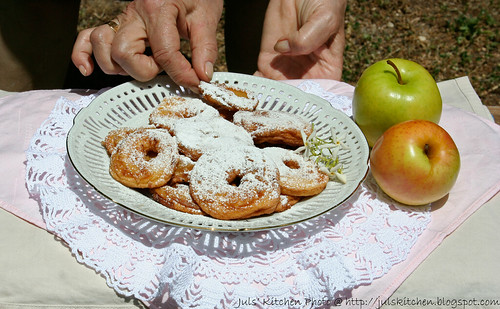
La cucina di nonna Menna: frittelle di mela / Apple fritters

Eccomi di ritorno dalla Puglia, mi devo ancora riprendere dalle mangiate!
La versione Italiana delle frittelle di mela è su Made in Kitchen!


Think about Tuscan cakes and sweet things. What comes in your mind? Maybe panforte, Siena ricciarelli, cantuccini and vinsanto, castagnaccio… these are all traditional elements.
But for my family? Which are our typical puddings? So I closed my eyes and I started thinking at granny: granny baking something sweet, making something to cuddle me, to strengthen me (as a child, believe me or not, I was skinny!), to conquer my greedy child heart.
So I came across my birthday cakes, soft sponge cake filled with custard crème and chocolate, or zuppa inglese, my favourite sweet thing during child tea time in winter.
Then the sweet and delicate flavour of apple fritters came into my mind: granny used to make them when I was a little child, when I used to sleep next to the stove, when I was ill at home from school, wrapped in a woolly blanket.
They used to be our comfort food since my father told me he always had apple fritters when, as a child, he was ill at home.


No wonder at all: just eggs and apples, you surely have them in a country house, don’t you?
When my sister was a child, we changed cake since her favourite one was a rolled thin sponge cake with custard crème: what a fun and chatty little girl, but sooo picky!
And so, after many years, granny and I decided to make them again, our apple fritters… and I suddenly found myself a child, wrapped in a heavy woolly blanket, cuddled by my grandma with hugs and sweet things.


::::: APPLES FRITTERS :::::
  • Golden apples, 2
  • egg, 1
  • flour, 2 tablespoons
  • beer, 2 tablespoons
  • salt, 1 pinch
  • extra virgin olive oil, 1 just under a tablespoon
  • icing sugar
  • olive oil to fry
Whip the egg in a bowl, add a pinch of salt, flour, extra virgin olive oil and beer: if needed, add a tablespoon of water to make a smooth but not too liquid batter. It is supposed to wrap up the apples, not to slip down!
Peel the apples, core them paying attention not to break them and cut the apples into thin horizontal slices of 1 cm.
Heat the olive oil in a large frying pan. The right moment to fry the apples is when the oil starts to smoke, as grandma says. Dip the apple slices into the batter and fry in the hot oil until cooked through and golden on both sides.
Transfer the cooked apples to a plate lined with paper towel. Sprinkle with some icing sugar and serve warm.

mercoledì 27 maggio 2009

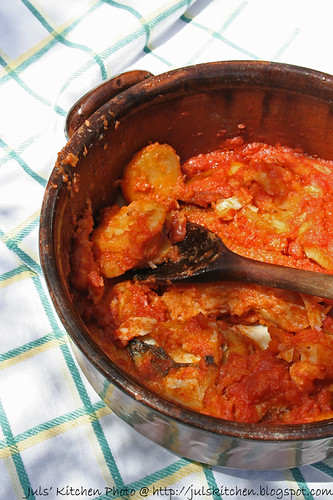
La cucina di nonna Menna: baccalà alla fiorentina

E' mercoledì! e il mercoledì cosa succede?
Juls si sposta su Made in Kitchen.


Oggi
baccalà alla fiorentina, all'uso di nonno Remigio.
Andate su Made in Kitchen per scoprire quale sia l'ingrediente in più che nonno aggiungeva al baccalà rispetto alle ricette canoniche, prima tra tutte quella di Pellegrino Artusi.


::::: DRIED COD FOLLOWING THE FLORENTINE'S WAY :::::

My grandfather Remigio used to live all alone in San Gimignano.
He brought up mum and aunt Silvana all by himself. He was a man of old times, a mason, but he was also very good in cooking. He loved dried cod and herring: he used to fry herring in his tiny kitchen and you could tell it from miles.. the whole house was surrounded by smell and smoke!
He used to take me to pick up pine-seeds to the public garden and he taught me how to break them with a little hammer.
He used to have a peculiar breakfast coming home from his vegetable garden: tuscan bread, tomatoes and onion!

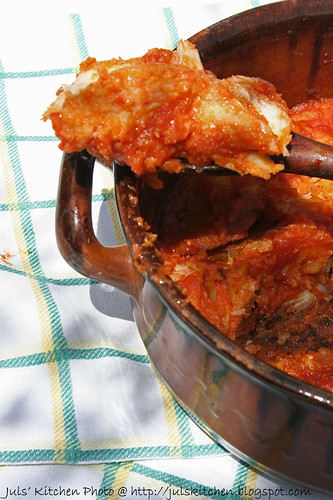
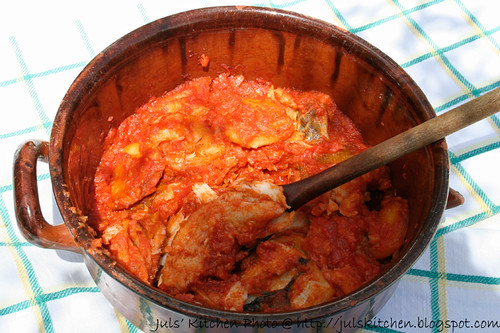
This is how my grandfather Remigio used to cook salted cod: he added potatoes to the traditional recipe, which add softness and taste.

Fancy a spoonful?

Ingredients for 4 people:
  • dried cod previously soaked, 500 gr
  • ripe tomatoes, 600 gr
  • medium potatoes, 2
  • garlic, 1 clove
  • onion, 1/2
  • white flour, a bit to flour the cod
  • salt & pepper
  • parsley to decorate
Cut the cod into 5 cm chunks. Pad them with some paper and flour them on both sides.
Peel potatoes and cut them into thin slices, then flour them too.
Fry cod chunks in a large non-stick pan until slightly golden. At the end, fry potatoes too.
Set aside in a dish with some cooking paper to loose extra olive oil.
In the meantime, make the tomato sauce.
Heat 3 tablespoons of extra virgin olive oil in a non-stick pan with a whole garlic clove and some finely chopped onion. Add 2 tablespoon of water to cook through the onion: it is supposed to be tender. Add the tomatoes, cut into small pieces, season with pepper and cook for at least 15 minutes, until it gets a liquid but thick tomato sauce.
Put cod and potatoes in a terracotta saucepan and cover with tomato sauce. Add salt only if needed.
Reduce to a simmer and cook for 5 minutes, so that all the flavours will be mixed together.
Sprinkle with some parsley and serve hot.


mercoledì 20 maggio 2009

La cucina di nonna Menna: i pici alla Senese

PER LA VERSIONE IN ITALIANO VI RIMANDO ALLA RUBRICA DI MADE IN KITCHEN!


Today we'll hit the second episode of our Tuscan cooking session.
It is worth saying though that "tuscan cooking" it is not really an appropriate way to define it..or better..them!!
I'll try to explain.. if you'll ask my granny: 'oma let's do a tuscan cooking column...What could we prepare? ..why not make a delicious trippa? She would answer.."what?? Trippa is from Florence, it is not a local dish then! (about 35 km n.d.r)".
Tuscany infact, as used to be a Gran Duchy, it is still..nowadays, ideally divided in different traditions, habits, customs.. that still oppose, even in the cooking way, Siena to Florence, or Pisa to Arezzo...

That is why I decided to illustrate a dish really rooted in my geographical area... or better - to be precise ( as my granny would say), time - honoured in Siena and in all the south part of the Siena zone. I am talking about the beautiful Val d orcia and of all the wonderful small medioeval villages that still mantain unchanged their appeal vico....
Few years ago I made a Val d'Orcia tour with few friends and we stopped over in Bagno Vignoni for dinner.
Bagno Vignoni is really the most enchanted village I have visited; its beautiful medioeval square with a huge swimmingpool of thermal water!
The four of us had pici as pasta dish!

::::: PICI PASTA :::::


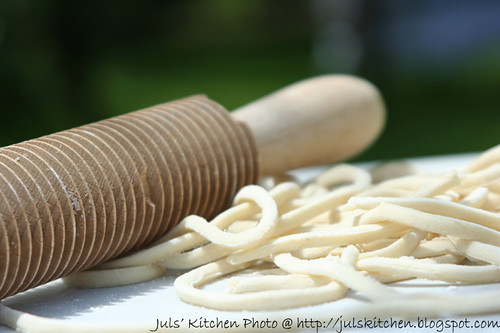
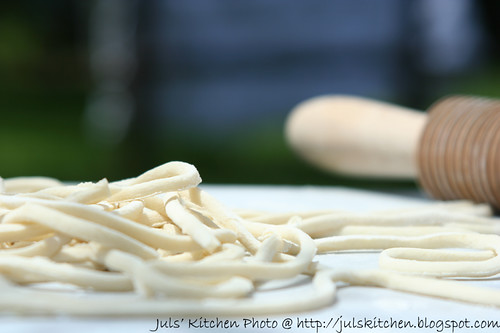
PICI are big, thick, hand - home- made spaghetti, typical of the country tradition of home making pasta. They are made just of flour and water. That's it! No eggs.
In Siena the typical sauces for pici are 2 mainly (although few more obviously exist): AGLIONE SAUCE, that could be translated as the mother of all the garlic sauce! and with bread crumbles.. a classical ( bread crumbles roasted in olive oil).

Ingredients for 4 people:
  • flour, 300 gr
  • warm water, 150 ml
  • extra virgin olive oil
  • salt
Put the flour on a large wooden working surface, make a well in the center of the flour and add the water little by little, stirring with your hands until a dough is formed.
The needed quantity of water may be different time by time.
Knead the dough until firm, compact and smooth.
Let it stand for 30 minutes at room temperature.

Now you have two way to make PICI.
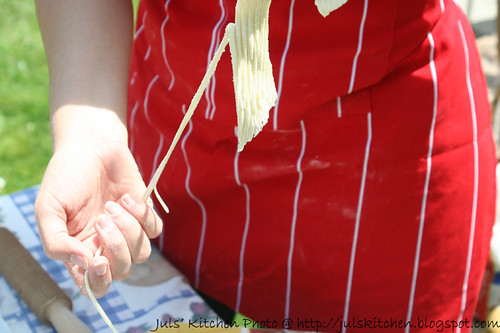
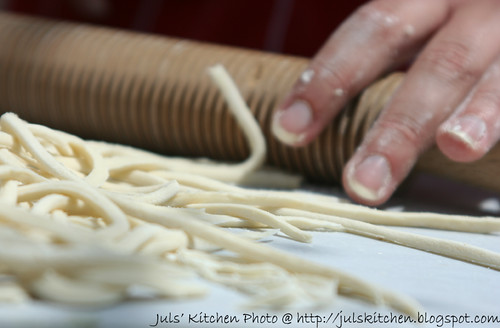
You can roll the dough into long thick noodles with your hands or you can use the apposite rolling pin (see the picture below).


Roll out the dough into a thick sheet (at least 5 mm), then use the pici rolling pin to make deep cuts in it. Then, take out one noodle after the other, streching them with your hands.


Place the pici on a sheet tray dusted with flour and set aside to dry.
Boil them in steaming water as common fresh pasta.
The pici will be one different from the other: it's their beauty!


mercoledì 13 maggio 2009

La cucina di nonna Menna: i crostini neri

Oggi è il gran giorno! Su Made in Kitchen esce la mia rubrica dedicata alla cucina toscana. Vi rimando qui, quindi, per il primo piatto scelto, i crostini neri! Qui vi lascio la versione in inglese.


Tuscany is bread without salt, is a good extravirgin olive oil, is a meat grill with friends, roasted chicken with potatoes and wild fennel, is cacciucco (a fish soup) on the seaside, Siena panforte and Florence schiacciata, is rosmary and sage... Tuscany, for me, is Granny Menna's Cooking.

Granny Menna is how I called my grandmother Marcella as a child.

Granny picks up wild herbs to make salad; as soon as mushrooms come out she runs into to wood to find them: here it is her biggest passion.

Granny belives to be an Etruscan woman, with her roots firmly planted in her country.

Granny knows how things are supposed to be done, because that is the way they're written in Pellegrino Artusi cook book. Aunt Pasquina gifted granny with this book when she got married: now it is yellowed with age, with some pages missing and old pictures as bookmarks.

Granny loves cooking and trying new recipes, but don't tell her she's good in cooking because she will shield herself saying that nothing comes as it should be when she cooks!

And yet, thanks to her delicious lunches, made for me when I came back home from school, now I am what I am, not skinny and thin, but curious about new flavours and willing to try new things.

Yes, then there is me... keen on oriental cooking, british lover, fond of spices and far away flavours. But it's time to give a chance to my tuscan cooking, trying to understand better those recipes that made me what I am, with the help of Granny and old uncle Pellegrino Artusi, a lively old man who will speak through the pages of an ancient book.
So, let's start with thew firts recipe.

::::: CROSTINI NERI - CHICKEN LIVERS CROSTINI :::::


These are the appetizers that should be done for great occasions and holidays.
When granny was a child, these crostini were made during threshing days, when the farmyard was crowded with people, men were working in the fields and women were cooking for them.

Since I was born, these crostini have always been present for christenings, weddings, birthdays and Christmas days.
This is the reason I have chose to start with appetizers - principii, according to old Pellegrino Artusi.
This is the way granny and mum make crostini neri, in a simple way. The smell of butter mingled with livers smell reminds me of early Christmas mornings. It cuddles you and brings you in the middle of Tuscan countryside.

Once you have made it, you should resist the temptation to eat spoonfuls of it!
It is delicious spread on a toasted slice of tuscan bread: you can soak the slices of bread with chicken broth (as my Aunt Silvana does), butter them (as granny does) or use them as they are (as my mum does)... the point is to use the patè still hot and steaming.


Ingredients:
  • chicken livers, 400 gr
  • red onion, 1/2
  • carrot, 1/2
  • celery, 1/2 stalk
  • capers, 3 tablespoons
  • leek, 1/2, just the white part
  • sage, 5 leaves
  • rosemary, 1 spring
  • bay leaves, 1
  • butter, 50 gr
  • water, 50 cl
  • anchovy paste
  • salt
Directions:
Rinse chicken livers and put them in a saucepan with the other ingredients (onion, carrot, celery, cappers, leek, sage, rosmary, bay leave, butter), coarsely chopped.
Don't forget to use a red onion, not white.

Why granny? Because with dark things you should use a red onion!


Season livers with salt: use a very tiny pinch of salt, because the tastiness is due to anchovy paste, that you are going to add at the very end.
Stir frequently and let cook for about 35 minutes, adding once in a while some tablespoon of water: livers should remain soft and wet.
When livers are done, put all the ingredients in a food processor or use a mill to have a patè.
This sauce is good when it remains rough, not too velvety: it should keep its rustic caracter!
At the very end, add little by little some anchovy paste and whip with some butter, tasting each time to find the right tastiness.
You can made it the previuos day: when it's time to serve it, heat the sauce, adding some butter or chicken broth.